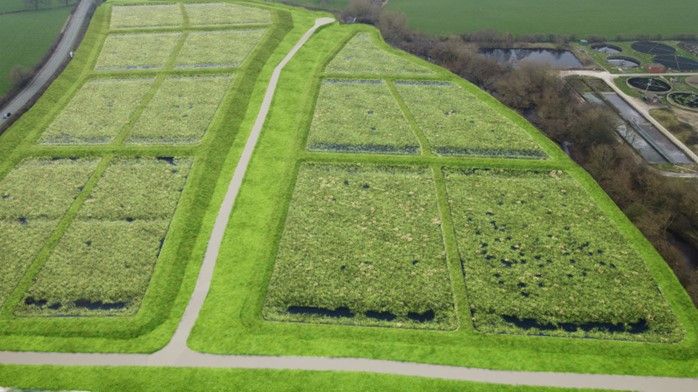
In the global quest for sustainable water management, Constructed Wetlands (CWs) stand out as a highly effective, eco-friendly, and cost-efficient solution for wastewater treatment. These engineered ecosystems are not just a green alternative; they are a sophisticated bio-system that mimics the natural purification processes of a marsh, transforming contaminated water into a reusable resource. CW technology represents a paradigm shift from traditional “grey” infrastructure (concrete and steel) to adaptable “green” infrastructure, promoting ecological resilience and resource circularity.
What is a Constructed Wetland (CW)?
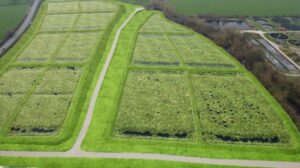
A Constructed Wetland is a system designed and built to mimic the physical, chemical, and biological treatment mechanisms found in natural wetlands. They typically utilize a combination of plants (macrophytes), a filter medium (soil, gravel, or sand), and specialized microorganisms to remove a wide range of pollutants from various types of wastewater, including municipal sewage, industrial effluents, and agricultural runoff. The goal is to purify water for discharge into natural bodies or, more critically in water-stressed regions, for safe reuse in irrigation, industrial processes, or groundwater recharge.
Types of Constructed Wetlands
CWs are classified based on how the wastewater interacts with the plant and soil components—specifically, whether the water flows above or below the surface. This design choice dictates treatment efficiency, land footprint, and maintenance needs.
- Free Water Surface (FWS) Wetlands
- Description: These systems closely resemble natural marshes or bogs. The water flows slowly over a soil substrate with the plant roots submerged in the water column. They are characterized by a shallow, open body of water that supports emergent, submerged, and floating aquatic vegetation.
- Application: Excellent for polishing effluent from other primary or secondary treatment stages, providing high removal of suspended solids, and creating significant wildlife habitat. They offer the greatest aesthetic value and opportunities for biodiversity enhancement.
- Drawback: Requires a large land area, has higher water loss due to evapotranspiration, and the open water surface can be susceptible to mosquito breeding and odor issues if the incoming wastewater is not properly pre-treated.
- Subsurface Flow (SSF) Wetlands
- Description: The most common and generally preferred type for municipal wastewater treatment. In SSF systems, the wastewater flows below the surface of a gravel, rock, or sand filter media. This design eliminates contact between the wastewater and the atmosphere and public, mitigating issues like odors, insect vectors, and pathogen exposure. SSF systems are further divided by flow direction:
- Horizontal Subsurface Flow (HSSF): Water moves slowly and continuously horizontally from the inlet to the outlet, parallel to the surface. They are simpler to design and operate but are often limited by oxygen transfer, making nitrogen removal challenging.
- Vertical Flow (VF): Wastewater is intermittently dosed (on-off cycles) onto the surface and percolates vertically downwards through the media. This intermittent loading pulls air into the media, dramatically enhancing oxygen transfer. VF systems are consequently highly efficient, particularly for nitrogen removal, and require a significantly smaller footprint (up to five times less area than HSSF).
Core Components of a CW System
A functional CW relies on the structural and biological synergy of its primary components:
- Impermeable Liner/Barrier: Absolutely crucial for environmental protection. It’s typically a synthetic geomembrane (HDPE) or a thick layer of compacted clay that lines the bottom and sides of the basin, preventing the untreated wastewater from seeping into the native soil and contaminating the groundwater.
- Filter Media (Substrate): Usually graded gravel, crushed rock, or coarse sand. This medium serves two vital functions: it provides the physical filtration matrix for suspended solids and, more importantly, offers the vast surface area required for the attachment and growth of bacterial biofilms—the true “workforce” of the wetland.
- Aquatic Macrophytes (Plants): Common examples across global systems include Phragmites australis (common reed), Typha spp. (cattails), and Schoenoplectus spp. (bulrushes). The plants are not the primary pollutant consumers, but their root systems and rhizomes are vital for:
- Oxygen Transfer: Transporting oxygen from the atmosphere down into the media (rhizosphere), creating essential aerobic zones.
- Flow Pathways: Preventing the filter media from compacting and creating high-permeability channels for wastewater flow.
- Nutrient Cycling: Absorbing a small but continuous amount of nitrogen and phosphorus for their own growth.
- Microbial Communities: The invisible powerhouse of the CW. Bacteria, fungi, and algae living in the biofilm on the media surfaces are responsible for the vast majority of pollutant breakdown through biological processes.
- Inlet and Outlet Zones: Engineered structures (often involving perforated pipes or flow distribution chambers) are crucial to ensure the wastewater is evenly spread across the entire wetland bed and that the treated effluent is collected efficiently and discharged without causing erosion or short-circuiting.
The Mechanism of Pollutant Removal
CWs are effective because they leverage four simultaneous, interlinked, and complementary treatment processes:
- Physical Removal
- Filtration: As water passes through the fine gravel and dense root zone, suspended solids (TSS) and fine particulate matter are physically strained and trapped.
- Sedimentation: The slow, non-turbulent flow rate within the basin allows heavier particles, including finer solids and organic matter, to settle out at the bottom of the bed, accumulating as sludge.
- Chemical Removal
- Adsorption: Pollutants like phosphorus, heavy metals, and certain complex organic compounds are attracted to and adhere to the surface of the filter media particles. The high surface area-to-volume ratio of the media is key to this process.
- Precipitation: Under specific chemical conditions (e.g., changes in pH or redox potential driven by microbial activity), dissolved metals or certain phosphorus compounds can change phase and precipitate out of the water column, becoming immobilized within the media.
- Biological Removal
- Organic Matter Degradation (BOD Removal): Microorganisms, primarily heterotrophic bacteria, consume the biodegradable organic matter (measured as Biochemical Oxygen Demand or BOD) in the wastewater. This process occurs:
- Aerobically: In the oxygen-rich zone near the plant roots or on the media surface (requiring O2).
- Anaerobically: Deeper in the saturated, oxygen-poor zones (without O2), which is crucial for overall mass reduction.
- Nitrogen Removal (Nitrification-Denitrification): This is a two-step microbiological process essential for preventing eutrophication:
- Nitrification: Aerobic bacteria convert ammonium (NH4+), a toxic compound in wastewater, to nitrate (NO3−) in the high-oxygen zones (e.g., Vertical Flow beds or the plant rhizosphere).
- Denitrification: Anaerobic bacteria then convert the nitrate (NO3−) into harmless nitrogen gas (N2), which is released into the atmosphere. This occurs in the deeper, oxygen-poor zones.
- Pathogen Removal: Physical straining, natural die-off due to unfavorable environmental conditions (lack of nutrients, UV exposure), and predation by other microbes effectively reduce the concentration of pathogens (bacteria, viruses, and protozoa).
- Plant Uptake (Phytoremediation)
- Nutrient Cycling: Plants directly absorb a relatively small, but continuous, amount of nitrogen and phosphorus for biomass production and growth. This acts as a long-term sink for these nutrients.
- Oxygen Transfer: The plants transport oxygen from the atmosphere down to the root zone (rhizosphere), creating the aerobic conditions necessary for the highly efficient nitrification step, which is the limiting factor in many wastewater treatment systems.
Design Considerations for CWs
Successful CW implementation requires careful design tailored to local conditions and regulatory requirements:
Design Parameter | Rationale |
System Type Selection | VF systems are chosen for high nitrogen removal and limited land area; HSSF for simplicity and low maintenance; FWS for habitat creation. |
Plant Selection | Must be locally adaptable, tolerant of saturated conditions, and resistant to high pollutant loads and local climate extremes (e.g., heat or salinity). |
Pre-treatment | Essential. Raw wastewater must undergo preliminary treatment to remove large solids and grit, preventing the rapid clogging of the filter media. |
Depth and Media Size | Bed depth impacts oxygen transfer and anaerobic zones. |
Maintenance and Operational Requirements
One of the main selling points of CWs is their low operational demand, but they are not maintenance-free:
- Routine Inspection: Regular checks of the inlet and outlet to ensure even flow distribution and prevent short-circuiting or clogging.
- Weed Control: Non-target vegetation must be removed to prevent competition with the designed macrophytes.
- Sludge/Scum Management: Accumulated solids from primary treatment must be removed periodically (usually every few years) to maintain hydraulic capacity.
- Harvesting: The plant biomass can be periodically harvested (typically annually after the growing season).
- Clogging Remediation: The most significant operational challenge, often requiring resting the bed or, in severe cases, media replacement (a major maintenance activity typically required only after 10–20 years).
Why Constructed Wetlands Thrive in Hot Climates (Middle East and Gulf)
For the arid and hyper-arid regions of the Middle East and Gulf, CWs offer unique and compelling advantages that align perfectly with water security and sustainability goals.
- Increased Treatment Efficiency: The consistently high temperatures in these regions accelerate the metabolic and kinetic rates of the microbial communities, leading to faster and more complete breakdown of pollutants like BOD and organic nitrogen. This enhanced biological activity can potentially reduce the necessary land area per person, making CWs more viable.
- Maximized Water Reuse: Water is the most precious resource. CWs produce a high-quality effluent suitable for non-potable reuse, such as extensive landscape irrigation and industrial cooling. This directly addresses water scarcity by displacing the need for expensive and energy-intensive desalinated water or the over-extraction of groundwater.
- Energy and Cost Savings: Compared to conventional activated sludge or membrane bioreactor (MBR) plants, which require continuous mechanical aeration and chemical dosing, CWs require minimal electricity for pumping (especially HSSF systems) and virtually no chemical inputs, drastically cutting operating costs in a region where energy demand is already a concern.
- Green Infrastructure and Climate Resilience: CWs transform barren or industrial areas into biodiverse green spaces. This not only improves the local aesthetics and provides recreational areas but also helps mitigate the urban heat island effect through evapotranspiration, providing a localized cooling effect and enhancing overall climate resilience.
- Low Evaporation in SSF Systems: The most critical advantage: Subsurface Flow (SSF) wetlands minimize evaporation by keeping the water below the surface of the media, thereby conserving the valuable treated water, unlike open-water systems or traditional stabilization ponds.
Economic and Sustainability Analysis
The decision to use a CW often comes down to economics over the lifespan of the project:
- Capital Expenditure (CAPEX): CWs typically have lower CAPEX than conventional mechanical plants because they require less concrete, steel, and mechanical equipment. The primary cost is land acquisition and excavation/filling.
- Operating Expenditure (OPEX): CWs have substantially lower OPEX due to minimal energy consumption (often just for primary pumping), reduced labor requirements (periodic vs. continuous staffing), and negligible chemical costs.
- Long-Term Value: The added benefits of water reuse, biodiversity enhancement, and the creation of green spaces (which can increase property values) provide a value proposition that conventional plants cannot match, making CWs an extremely attractive Life Cycle Cost solution.
Constructed Wetlands are proving to be a robust, sustainable, and economically sound technology, offering the Middle East and Gulf a vital tool to secure their water future while simultaneously enriching their environment. They are the epitome of ecological engineering—a true convergence of nature and innovation.